If you read my CarTurf post, you already know how the registration side of this worked out. In this post I go into more about the actual process of shopping around at dealerships and buying the car. It was a lot messier than I would have liked. Then again, I tried to do it all in a week.
Here we go: finding, buying, and then fixing all the things that went wrong in the first couple of months.
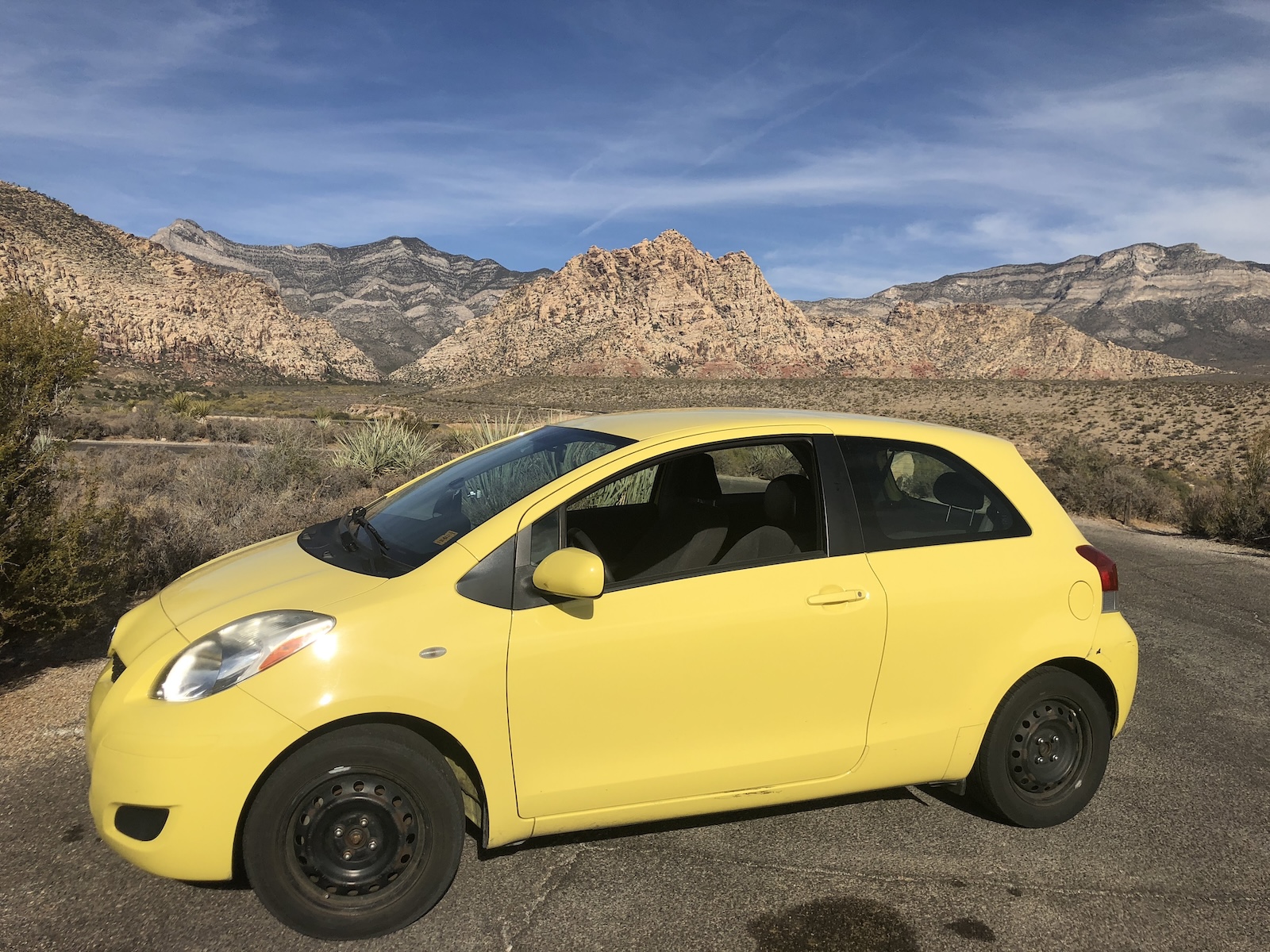
To start off with, I’m not a car person. I hadn’t owned a car in almost ten years, selling my little yellow Yaris (which I loved!) back in 2018 before buying a one way ticket to Medellín, Colombia.
I also don’t speak any German beyond: beer, thank you, please, good morning, good afternoon and goodnight. My car buying headquarters was set up at the Premier Inn in Eschborn while my jetlagged brain was still on Okinawa time.
Months of mobile.de and slowly downsizing my dream
The dream started long before I landed in Germany. For months ahead of time, I was poking around on mobile.de trying to get a feel for the size and shape of German cars. Coming from the US, I’d heard of the names Citroën, Peugeot, Renault, and Opel, but I had no idea what body styles they actually made over here in Europe, or how those styles compared to what I knew.
I tried not to get too attached to a specific car while looking through listings, because I knew that months out, whatever I liked would probably be gone by the time I actually landed. Anything under $5,000USD in Germany wouldn’t typically sit on a lot for long.
While I was doing this, the months seemed to stretch out interminably and I was restless with the feeling that I couldn’t do anything to prepare.
I kept watching YouTube and learning from others and I began to question what I truly wanted in a vehicle. When this whole “van life” idea started, it was very much a van that I was after. Those are the big sexy videos all over YouTube, and in North America that makes sense. Lots of wide open roads, huge parking lots, a country built for big vehicles.
But the longer I considered it, the smaller my ambitions got. I was fascinated by the people I saw online living minivan life, which turned into deep dives into people living full-on car life. I found myself drawn to the challenge of it, could I actually live that small?! I already lived pretty minimally in general, so a minivan felt like the sweet spot, with a regular car as my fallback if budget forced my hand. Speaking of budget, I’d earmarked $10,000 USD but was shooting for half that, buying a car under $5,000, partly to have some space for fixes and partly because I was attracted to the challenge: could I get something livable yet cheap?
For a while I was convinced I’d end up with a Dacia Lodgy, the closest thing to a minivan I could find in my under $5,000 price range. Full minivans like a Toyota Sienna simply don’t seem to exist in this market the way they do in the US.
I looked at estate cars (station wagons) and SUVs too, but I wanted headroom above just about anything else else, so nothing beat the boxy, van-adjacent shape for interior space.
By the time I landed in Japan (my last stop before Germany), I had a saved search I was refreshing often: SUVs, vans, and estate cars within 100 miles of Frankfurt, under €7,000, though I really wanted to spend about €4,000. (If my ADHD brain decided to lose interest in this dream after a short time, I didn’t want to have spent too much. I had ten to fifteen cars sitting in a list and that was about it.
I genuinely tried to do this the “right” way first
I do a lot of winging things but I really wanted to get this right so I tried. I really did. A few days before I left Japan, I messaged every dealer on my saved list. I specifically asked about the upcoming Monday and Tuesday, said I wanted to view specific vehicles, gave them my name and WhatsApp number.
Nothing. Radio silence.
I landed in Frankfurt and tried again. Here’s a message I sent out, in both English and German versions. (Perhaps a German person can tell me if I committed some terrible faux pas but I thought it was simple and to the point.)
English: Hello, I am interested in the Opel Zafira B Sport (€3,950) listed on mobile.de. I would like to arrange a viewing and test drive on Tuesday, July 7th or Wednesday, July 8th, if you have any availability then. Would you be open to an independent inspection of the vehicle before purchase, either at a nearby TÜV, DEKRA, or ADAC testing center, or via a mobile inspection service? I speak English and Spanish, but unfortunately I do not speak German. I will not need financing and will pay by cash or bank transfer. I am also available by phone using WhatsApp. Please feel free to message me at the number above if that is easier. Thank you.
German: Sehr geehrte Damen und Herren, ich interessiere mich für den Opel Zafira B Sport (3.950 €), der bei mobile.de inseriert ist. Ich würde gerne einen Termin für eine Besichtigung und Probefahrt am Dienstag, den 7. Juli, oder Mittwoch, den 8. Juli, vereinbaren, falls Sie an einem dieser Tage Zeit haben. Wären Sie damit einverstanden, dass ich vor dem Kauf eine unabhängige Untersuchung des Fahrzeugs durchführen lasse – entweder bei einem nahegelegenen TÜV-, DEKRA- oder ADAC-Prüfzentrum, oder über einen mobilen Prüfdienst? Ich spreche Englisch und Spanisch, leider aber kein Deutsch. Ich benötige keine Finanzierung und werde bar oder per Überweisung bezahlen. Ich bin außerdem telefonisch über WhatsApp erreichbar. Sie können mir gerne unter der oben genannten Nummer schreiben, falls das einfacher ist. Vielen Dank.
And it still mostly didn’t work.
I got no responses in the days before or after landing. I got the sense that a lot of these dealers throw up their listing and then just wait for the phone to ring, they’re not checking messages on the site. And since I couldn’t call and speak German, that avenue was closed to me. So after trying to do this properly, I did what felt like the only option left … I got in a car and started driving to dealerships in person.
My hodge podge list
I wish I’d been a lot more organized but I was typically just chudking listings in the notes app on my phone each night before heading out in the morning. It looks like this:
📍 Ford Transit - 13 mins Courier Kombi, Tüv €5,800 We speak: العربية, Deutsch, English Mon - Fri 09:00 h - 18:00 h Sat 09:00 h - 14:00 h
📍 Dacia Lodgy - 30 mins Stepway KLIMSHNAVPDCALUHU/AU* €5,999 Opens 10AM
📍 Skoda Roomster - 50 mins from hotel 1.2 Klima/Alus/1.Hand €5,650 5-star dealer. We speak Deutsch, English Business hours Mon - Fri 10:00 h - 18:00 h Sat 10:00 h - 14:00 h
Many listings had a language section showing what they spoke. Some dealers listed six or seven languages spoken. In practice, I’d say a fair number of them oversold that a little. “We speak English” sometimes meant one guy who could manage only a bit of it, but the language tags at least told me where I could walk in and ask for someone who spoke English, and when to walk in with Google Translate at the ready.
The export-only car situation (why some dealers won’t sell to you)
I’d done a little digging into this before arriving and it’s quite useful to know before you go, yet still confusing at times.
In Germany, every car has to pass a TÜV, or Hauptuntersuchung (HU), a roadworthiness inspection that certifies the car is safe to drive. Americans aren’t really used to this. In the US, your car can be held together with hope and duct tape and still be legal as long as it moves. Germany is stricter.
On top of that, German law requires that even used cars be sold to private buyers with at least a one-year warranty. A lot of dealers selling older, rougher cars don’t want that liability. Their inventory is full of what I’d call clunkers, and they know it. So instead of selling to you as a private consumer, with the warranty obligation attached, they list the car for “export only” or “business sale only.” That way they can skip the warranty requirement entirely. A business doesn’t have the same obligations as a private buyer.
I ran into this constantly. A dealer would take one look at me, say no, and when I pushed for a reason, I’d get some version of: “it’s export only, it’s for businesses.”
What’s happening is that the dealer is routing around the warranty law. Some of those cars end up going to places like Romania or Bulgaria, where the rules are looser and a car that doesn’t pass German roadworthy standards can still get fixed up and sold. Others get sold to a business that scraps them or exports them outside the country.
If you happen to already have a registered business back home, even a simple LLC, some dealers will sell you an export-only car if you can show proof of that business.
One dealer offered to look into this for me. He’d never done it before with a US business but he said he didn’t see why it wouldn’t work. I get the feeling it’s VERY loose. That they literally would’ve just needed to see my piece of paper for my LLC and would have been able to satisfy the German authorities. “Look, we didn’t sell it to a private American lady, we sold it to her business. That’s online. In the US.” Bureaucratic fluff.
If you’re planning ahead and you’ve got a LLC or sole proprietorship already registered, it might be worth bringing that paperwork with you specifically to unlock cars that would otherwise be off the table. In a lot of US states registering a business costs around $100 or so and it could be well worth it if you’re looking for a cheap vehicle.
And then there is a third category: dealers who know the rule and sell to you anyway, just verbally waiving the warranty. “I can’t give you a warranty on this one.”
I don’t know the legal exposure on either side of that conversation, dealer or buyer. What I did know is that I’m American, and I’m not expecting a used car to come with a warranty because that’s not how a used car has ever worked in my experience.
If you want a warranty in America, you go to the pre-owned certified folks, and you get a nice fancy car, and it comes with a warranty of some kind. I just wanted somebody who would sell me a clunker of a car, and hopefully it wasn’t too bad. If there’s anything shady about it, it just seems level 1 out of 5 to me.
The dealer spectrum: rude, indifferent, and actually lovely
Once I started showing up in person, the range of seller behavior I encountered was all over the place.
There were the dismissive ones. Too busy to talk, waving me off, “come back tomorrow,” seemingly annoyed that I was standing in their lot wanting to buy a car. Zero patience for explaining anything, and I had to actually stand my ground a few times just to get an answer to, “What time tomorrow?” or, “if you can just tell me whether you still have the Berlingo, that’d be great.”
There was the fancier, CarMax-style lot: clean, organized, priced clearly, professional office.
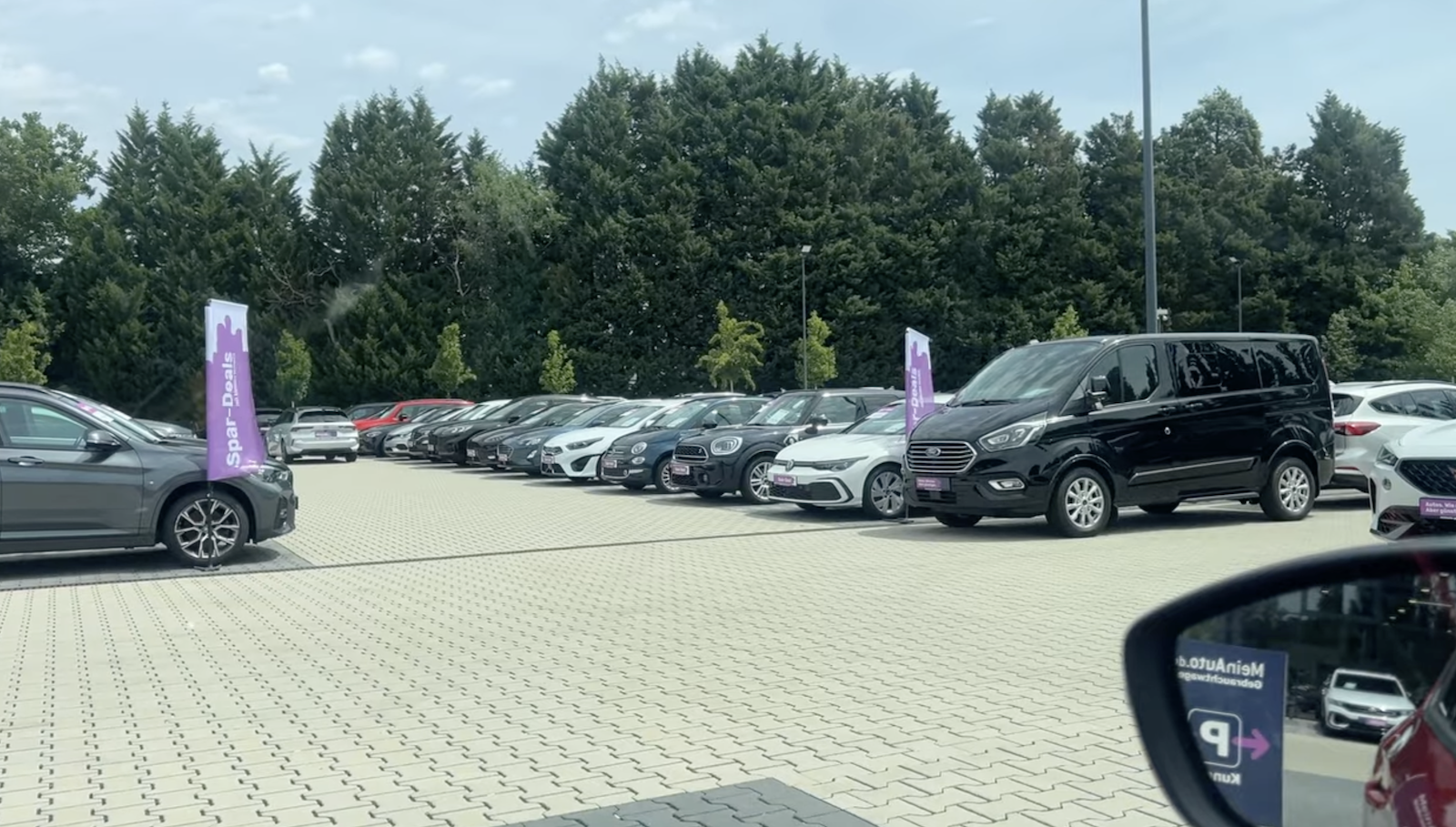
These genuinely would have been a great experience if I’d had that kind of budget. But wandering that lot helped me calibrate what size cars were and what various makes and models I should keep an eye out for in their older, cheaper versions.
And then there were the guys who actually helped. Not pushy in the way I associate with American car sales. They were informative. “This one’s a bit much, but here, let me show you this one,” or, “I’ve got one here but the miles are high.”
One of them ran a scruffy little lot with a Grand Picasso and some Renault Scenics sitting around, happy to communicate entirely over Google Translate and WhatsApp, and followed up via WhatsApp a couple of times just to see if I was still interested.
The other helpful one was the only dealer who ever responded to a mobile.de message, sending me a WhatsApp message saying I could come look at the car that day. That was the car I ended up buying.
Cash, contracts, and the weird feeling of just handing a stranger cash and hoping for the best
Every single dealer I spoke to wanted cash. Cash first, cash only, in most cases. If you’re planning to do this, it’s a good idea to check on your ATM withdrawal limits before you need them. Even with talking to my bank to raise it, the highest limit allowed was $4,000USD a day, and my bank could only raise that limit for a 24-hour window at a time. My car ended up costing €4,200, so I had to withdraw across two separate days, speaking to my bank each morning to bump the limit again.
The buying process itself happened in two stages. On day one, I put down a deposit of €2,100, and signed a sales contract that doubled as a receipt: the dealership’s info, my info, the car’s info, the amount paid. A one page document that was about as simple as a piece of paper can be.
As I was leaving I felt so weird. I’ve just handed a stranger over two thousand euros in cash, in a country where I don’t speak the language, and I’m walking away with a single sheet of paper and no car. What if I come back tomorrow and this guy’s just gone? I have never bought a car this way before, in the US it’s always been a dealership with all the fluorescent lighting and financing paperwork that comes with it, so the sheer simplicity of it felt almost more unsettling than reassuring.
(Nothing went wrong).
I went back the next day, test drove the car, and he tore up the first contract and wrote a new one for the full €4,200. I handed over the rest of the cash and got that copy, along with the documents for the car.
What you walk away with at time of purchase
At the time I signed the contract and handed over the rest of the deposit I got the following documents. Read more about them in my CarTurf post as they helped review them over the phone while I was at the dealership.
- Title Part 1
- Title Part 2
- The COC (Certificate of Conformity) — the official spec sheet: make, model, fuel type, technical details
- The original TÜV / HU — the roadworthiness inspection
- The sale contract
That’s genuinely it. It felt almost anticlimactic, a handshake and a piece of paper, compared to what I remembered from buying a car in the States.
I will say that if the TÜV that the car currently has, has less than a year left on it, it’s worth asking the dealer to get a new one done before you finalize. It’s a relatively small cost (I’ve heard around $100) and it buys you time (2 years) before you have to deal with getting it redone. My car’s TÜV was completely expired so he got a new one for me.
Unlike buying a car in the US, you don’t drive off the lot that day. Getting the plates is a separate step entirely (I cover all of that, and how CarTurf handled it, in the CarTurf post).
What I’d do differently (starting with the checklist I made and then completely ignored)
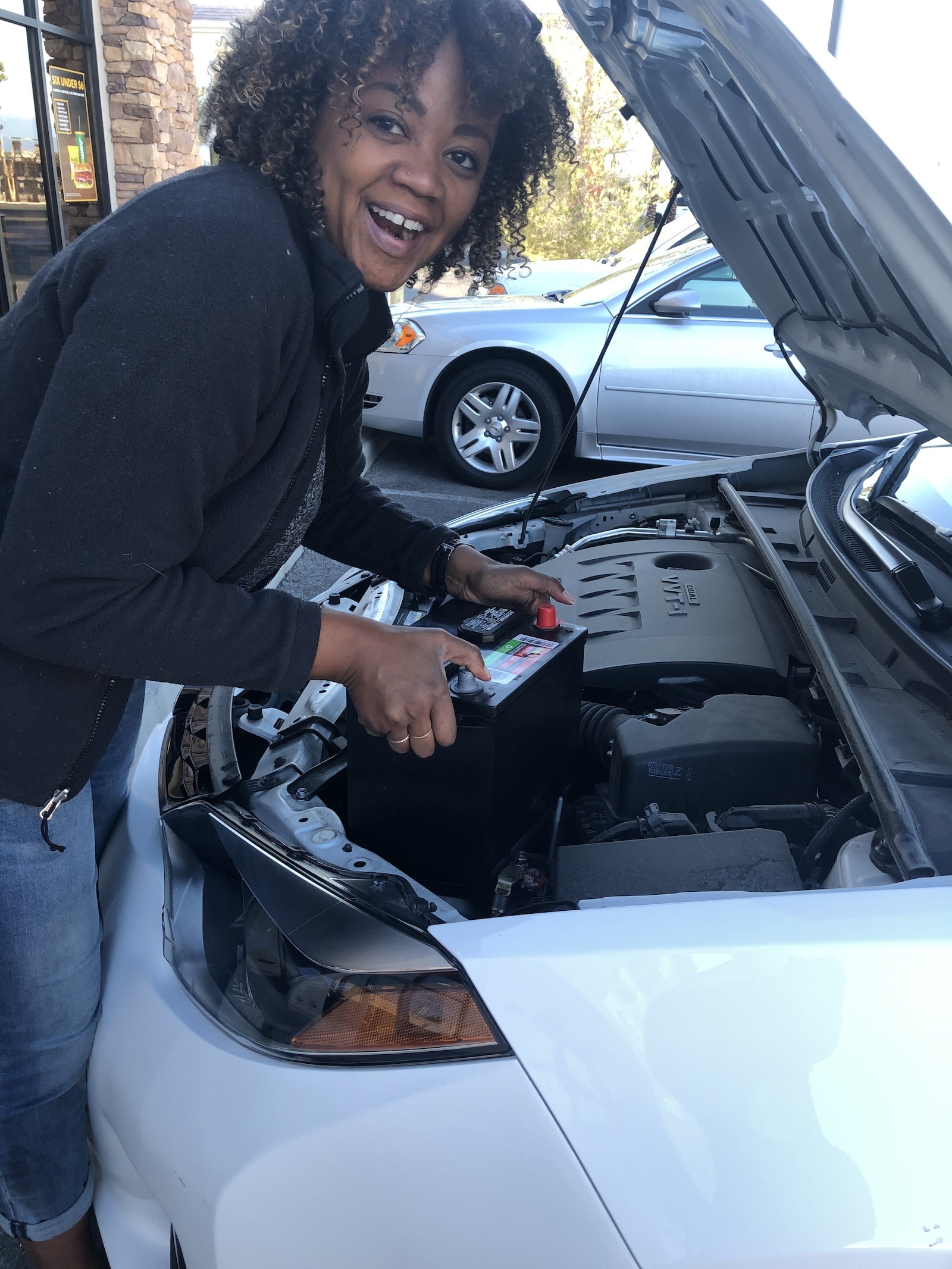
Well, if I could go back way further in time, I would have known more about cars, period. I hadn’t owned one in almost a decade. I can change a tire, though I haven’t in over ten years. And I have photographic evidence of myself changing my housemate’s battery once, years ago. But I certainly don’t remember how anymore.
Before I left Japan, I actually used AI to help me build myself an exhaustive used-car inspection checklist: what I should actually be looking for.
And then I followed almost none of it. I brought a tape measure and forgot it half the time. I would bring hand sanitizer and paper towels to clean my hands after poking around under the hood… only to realize I’d left them in my rental car by the time my hands were dirty.
What I actually did was look at a car, decide it seemed “in visibly good condition,” and go with my gut.
I wasn’t in a position to take my time the way most people can, go home, sleep on it, come back next weekend. I had days, not weeks, and I genuinely could not afford to be picky about small stuff. If the tires were bad, I’d deal with new tires. That’s the trade-off I made, consciously, with the time I had.
I probably should, but I also don’t regret not paying for an independent inspection. It would have cost around $150-200. I skipped it, partly because I was exhausted, partly because it was yet another daunting thing to set up in German, and partly because I suspected that if someone told me “X, Y, and Z are wrong with this car,” I’d have to make a genuinely hard call about whether to keep looking, and I didn’t have it in me at that point.
I expected things to go wrong with the car, part of setting my budget at $5000 instead of $10,000. I knew I might be closer to $10K by the time I got a car up and running. It’s a used car. Things break. And it’s entirely possible an inspection would have talked me out of the car I ended up loving. So in the end, it’s going to be totally up to you and your risk levels.
In general I wish I’d had someone in my corner who actually knew cars really well. A local German friend, or an English-speaking mechanic back home, anyone. I called my dad a few times for questions, but buying a used car involves a hundred small judgment calls and my brain isn’t wired for, “let’s slow down and think this through,” when I want something really bad. I just kinda went for it.
Finally, I wish I’d taken time off work. I’d definitely suggest that, it was pretty insane to bite all of this off. I’d just come off a vacation a few weeks prior, horrible timing, so I wasn’t able to take more time off as there was a ton of stuff I needed to get done for my client.
Nella, and her rough first two months
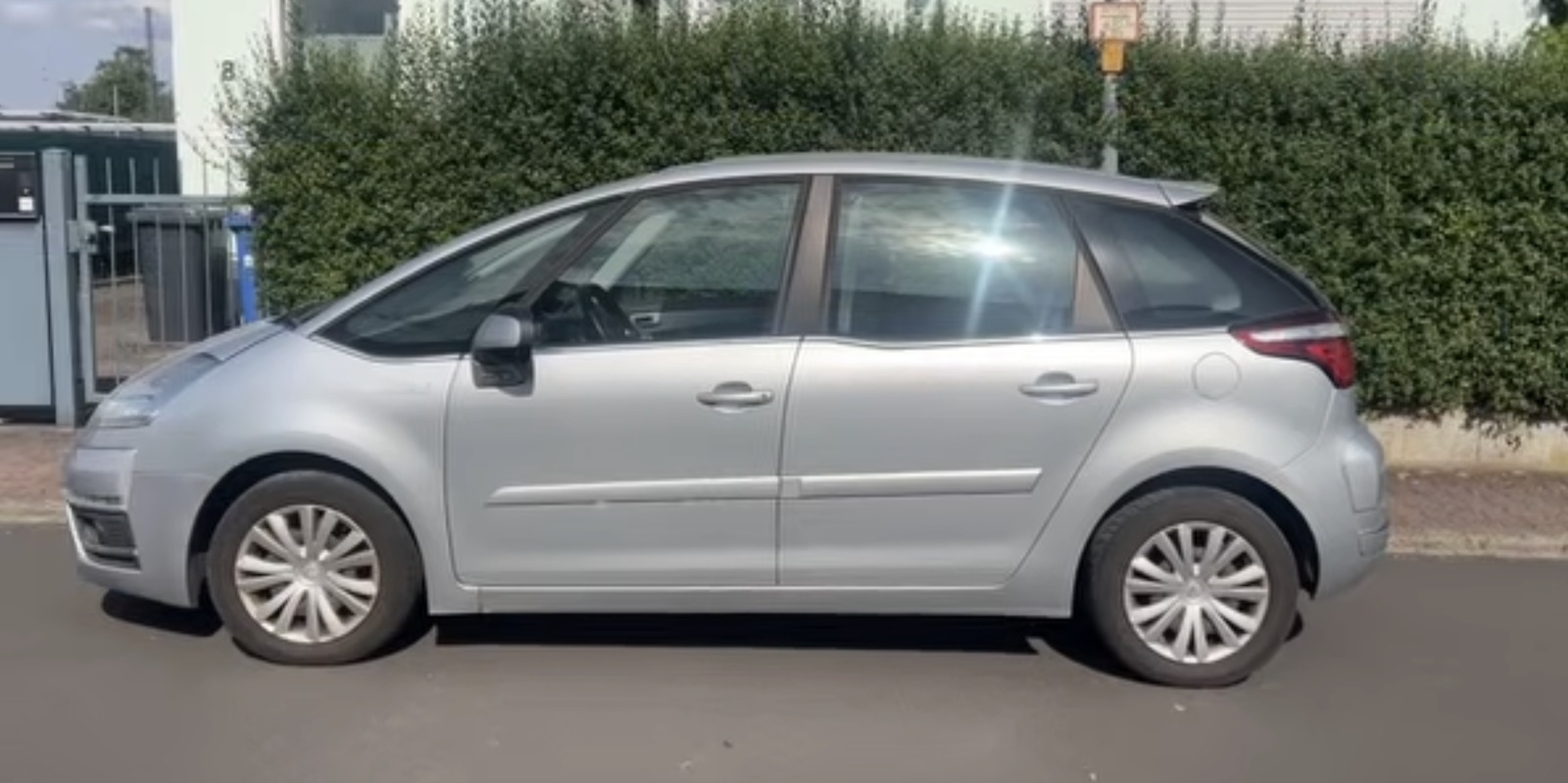
The car I ended up with is a 2012 Citroën C4 Picasso with about 72,000 miles on her when I bought her. I named her Citroënella, Nella for short. She’s semi-automatic, which I’ve since learned means she shifts gears on her own like an automatic, but noticeably clunkier, like someone still learning to drive stick. People keep telling me this is a French car thing. I’ve heard the mechanics call them “Shitroëns,” and I laugh but I also love her.
On the test drive, she was jerky and rough, which I chalked up to sitting unused for a while. Turns out that was only partly true.
The gearbox. A couple of weeks in, after some genuinely lovely road tripping through Switzerland, France, and Italy, she started running rougher. A lot rougher. Then, in a parking lot, she got stuck in reverse. I turned her off, turned her back on, and prayed to the goddess of adventure and she worked; this would become something of a pattern over the following days whenever a “gearbox fault” message flashed up.
She made it all the way to England before the hilly climbs in Yorkshire had her struggling. I have a lot of friends in the area so I asked for a good garage recommendation and got her looked at. At the first garage it turned out British mechanics can’t always work on European cars, the computer systems are different.
I genuinely thought the cars would be identical just built in mirror image of each other. But the garage was lovely and they referred me to a specialist who confirmed it: a gearbox fault, she needed a full replacement (a gearbox is a transmission for us Americans, I had no idea.)
I dropped her off on a Tuesday, picked her up Friday, with a fully rebuilt gearbox. It was not cheap ($1750ish USD) but still cheaper than I expected. According to the mechanic gearboxes can last anywhere from 50,000 to 100,000 miles, so at 75,000-ish, hers had just reached the end of its natural life. Genuinely grateful it happened where and when it did, a few weeks into the trip, near friends, not stranded somewhere remote. There’s something of a relief having one of the most expensive issues a car can have, already sorted.
The battery. She wouldn’t start the very first day I test drove her. The dealer said the battery was dead and jump-started her. He said he’d put a new battery, (as in a new working one, not a new new one).
About a month later, the battery started struggling intermittently. I woke up one morning next to Whitby Abbey with a smile on my face, bursting with enthusiasm for the day, only to turn the key and hear the dreaded trying and failing to start. Turned it off, sent up a prayer to the goddess of adventure again, and eventually she started.
I bought a portable jump starter, which solved the immediate stress of not wanting to get stranded but not the underlying problem.
At a Halfords in Edinburgh, a week or so later, and another round of diagnostic testing revealed the first mechanic (a Halfords back near Whitby) hadn’t tested it properly, he didn’t know where to ground the negative terminal. Halfords could diagnose the problem, you need a new battery, but they couldn’t look up the correct battery without a UK registration, which I obviously didn’t have.
I eventually found a place (shout out to Kwik Fit Dunfermline) that sorted a new battery for me and now I’ve got peace of mind there too.
The tires. Both front tires also got replaced in Edinburgh on a mechanic’s advice, ahead of a long drive up into the Scottish Highlands. Not as expensive as I expected, and worth every penny given that I was heading off for a several month road trip with no fixed timeline.
The air conditioning. Her AC doesn’t work. I took her to get looked at at a German place that does TÜVs. They charged me several hundred euros to fill her with freon and then tell me the AC didn’t work which I already knew. They said that they weren’t quite sure what the issue was but it could be around $1500. I showed myself to the door. The whole thing felt a bit shady. I figured I’m not too good to roll the windows down like back in the old days. Plus I hate hot temps so plan to spend time in more moderate climates whenever I can.
Miscellaneous There were also several other things I got done. Window tinting, car wash & detailing.
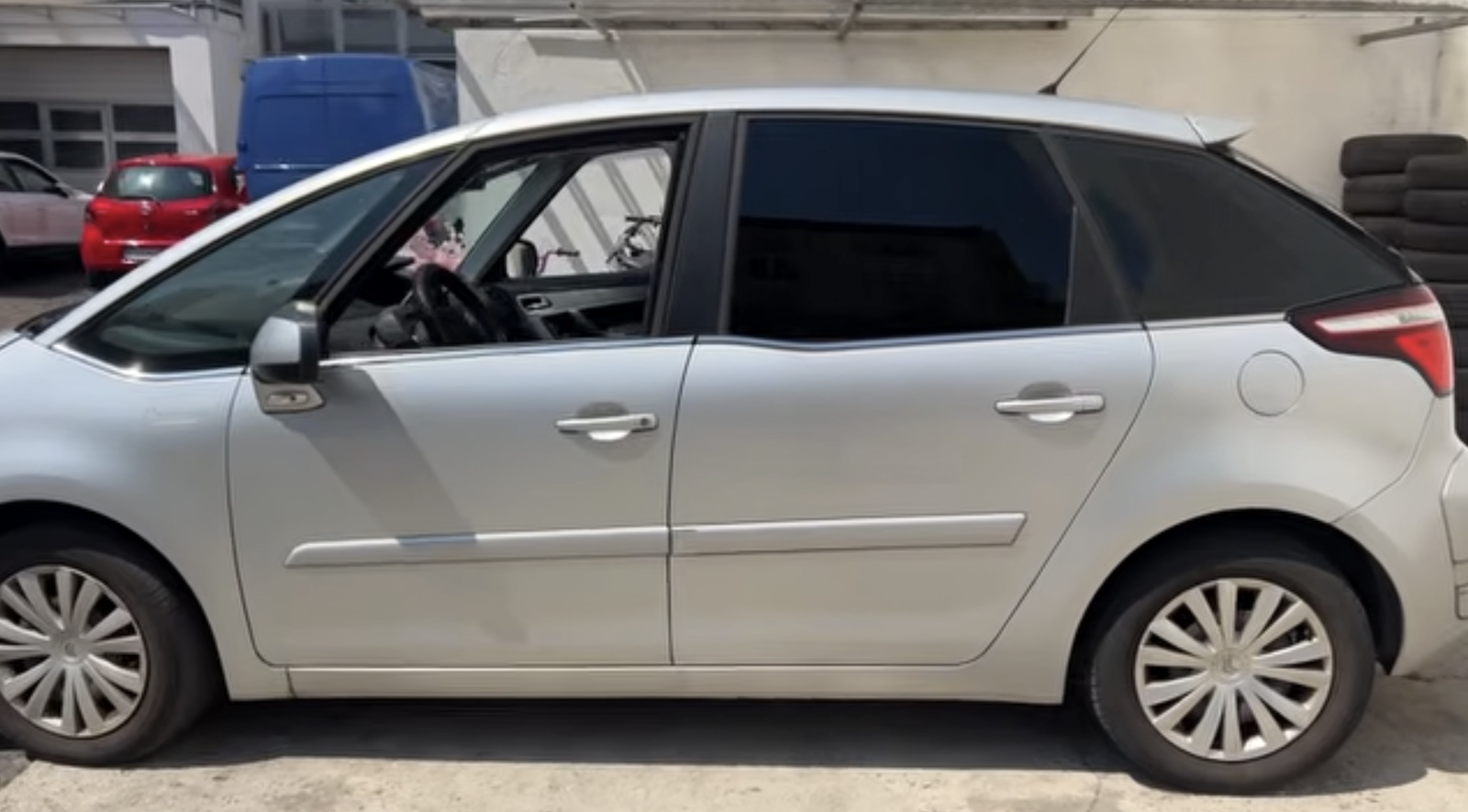
By the time all of that was done, I’d put roughly $3,000 into a car I’d bought for just under $5,000, bringing the real total closer to $8,000. Compared to what months of rental cars and insurance would have cost me, I still feel good about that math. And it checks out against my initial budget of $10K. I think I made the right decision going low and being able to know what (and where and when) recent work has been done on her. I now have actual service dates, receipts, and history on her.
So, was it worth it?
Genuinely, yes. It was scarier in anticipation than it ever was in the moment. CarTurf did their part, I did mine, however imperfectly, and between the two of us, it worked out. I love this car. Perfect size, perfect shape and the rough first two months don’t change that; if anything, they taught me more about her, and about basic car ownership, than a clean, uneventful start ever would have.
If you’re thinking about doing something similar, I’d say: 100% go for it!
If you’ve got questions I haven’t covered, reach out to me at mashon [at] liveworktravel.com.
Frequently Asked Questions
Can an American buy a used car in Germany without residency? Yes. Buying the car itself doesn’t require residency, only registering it does. You can buy from a private dealer with cash or a bank transfer with no German bank account or residency required. Registration is the part that requires a workaround, covered in my CarTurf post.
Why won’t some German car dealers sell to private individuals? German law requires used cars sold to private buyers to come with a one-year warranty. Dealers who don’t want that liability, often on older cars, list them as “export only” or “for businesses only” instead, which lets them skip the warranty requirement.
Do I need to speak German to buy a car in Germany? No, but it makes things significantly harder. Many dealers list the languages they speak on mobile.de, though some overstate their actual fluency. Google Translate and WhatsApp got me through the entire process. Messaging dealers in both English and German (see the template above) improves your odds of a response.
Do German car dealers take cash? Almost every dealer I spoke with wanted cash, especially for cars under or around €5,000. Check your bank’s daily ATM withdrawal limit before you go; you may need to raise it, and some banks only allow a temporary increase for 24 hours at a time.
What documents do you get when buying a used car in Germany? Title Part 1, Title Part 2, the COC (Certificate of Conformity), the TÜV/HU roadworthiness inspection, and the signed sale contract. These are what you then hand over to a service like CarTurf to get the car registered.
Should I get an independent inspection before buying a used car in Germany? Maybe. Probably. It is of course recommended even though I didn’t. An independent inspection at a TÜV, DEKRA, or ADAC center typically costs around $150 and can catch expensive problems (like a failing gearbox) before you buy, not after.